
Silence & Tension: The Art of Styling Modern Minimalist Interiors
In the era of Modern Minimalism, we strip away excess lines and clutter to return to the essence of living. Yet, extreme subtraction can sometimes leave a space feeling cold or sterile. How do we fill this void? The answer lies not in more furniture, but in the intervention of art.
This guide explores the symbiotic relationship between minimalist design and abstract art, using four specific styling cases to show you how to inject soul into your space.
01. The Visual Anchor: The Warmth of Reason
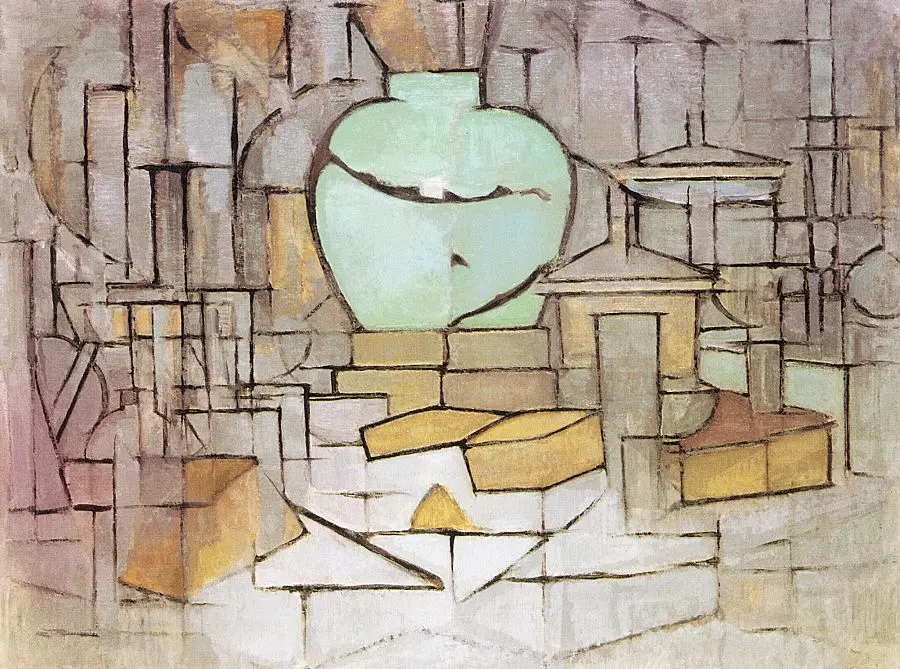
The foundation of modern minimalist design is built on order and structure. When we speak of "minimalism," we are essentially seeking an internal serenity.
Mondrian's Still Life with Gingerpot II is a textbook example for styling minimalist interiors. As a transitional work from figurative to pure abstraction (Neoplasticism), it strips away the surface appearance of objects to reveal their internal "structure" and "order."
Styling Inspiration
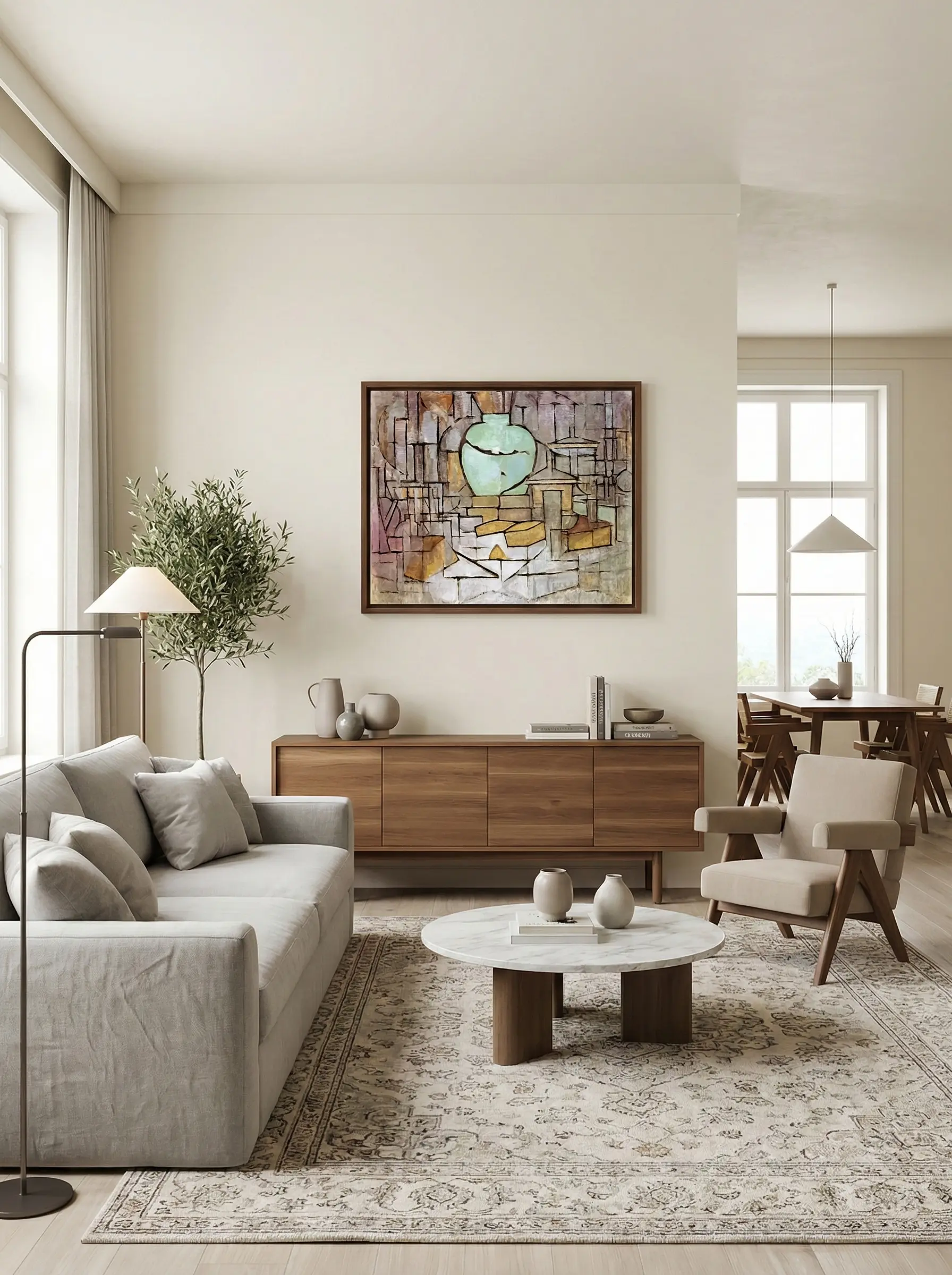
- Color Harmony: The artwork's muted, earthy palette (soft grays, browns, and ochres) creates a seamless continuation with the beige sofas and light wood consoles typical of modern interiors.
- Spatial Function: The grid-like composition acts as a visual anchor, giving open-plan living rooms a sense of weight and rationality.
02. Restraint & Liberation: Alchemy of Color in the Dining Room
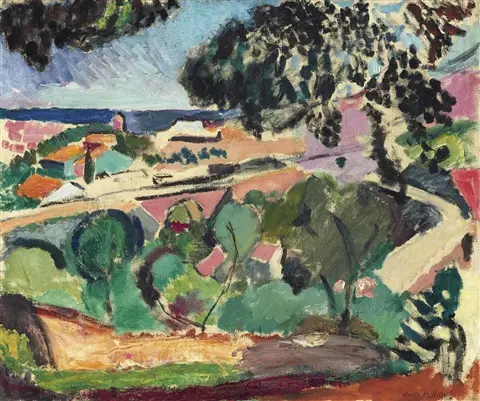
In the vast white spaces of minimalism, sometimes we need a disruption—a spark of vitality to break the silence.
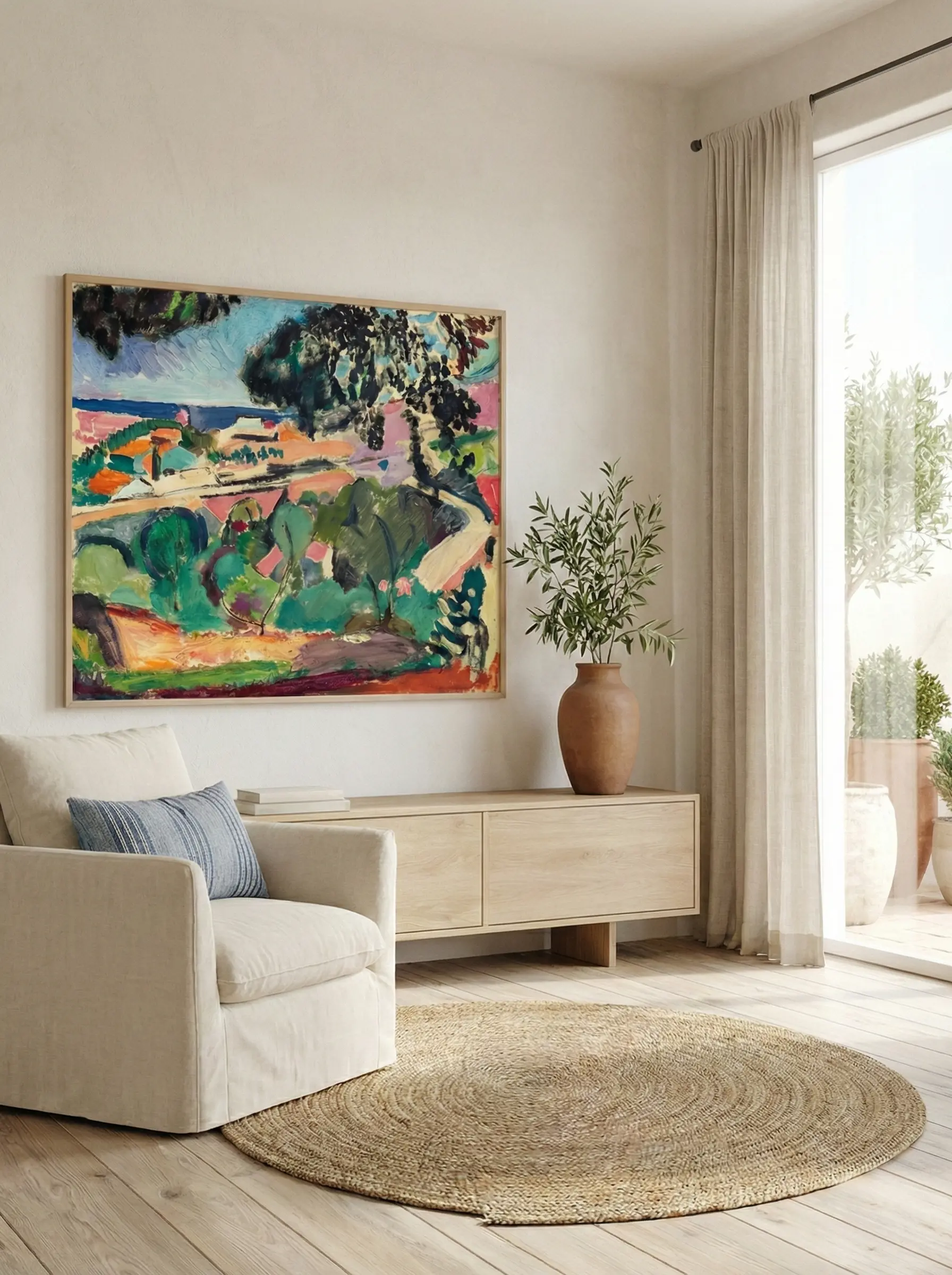
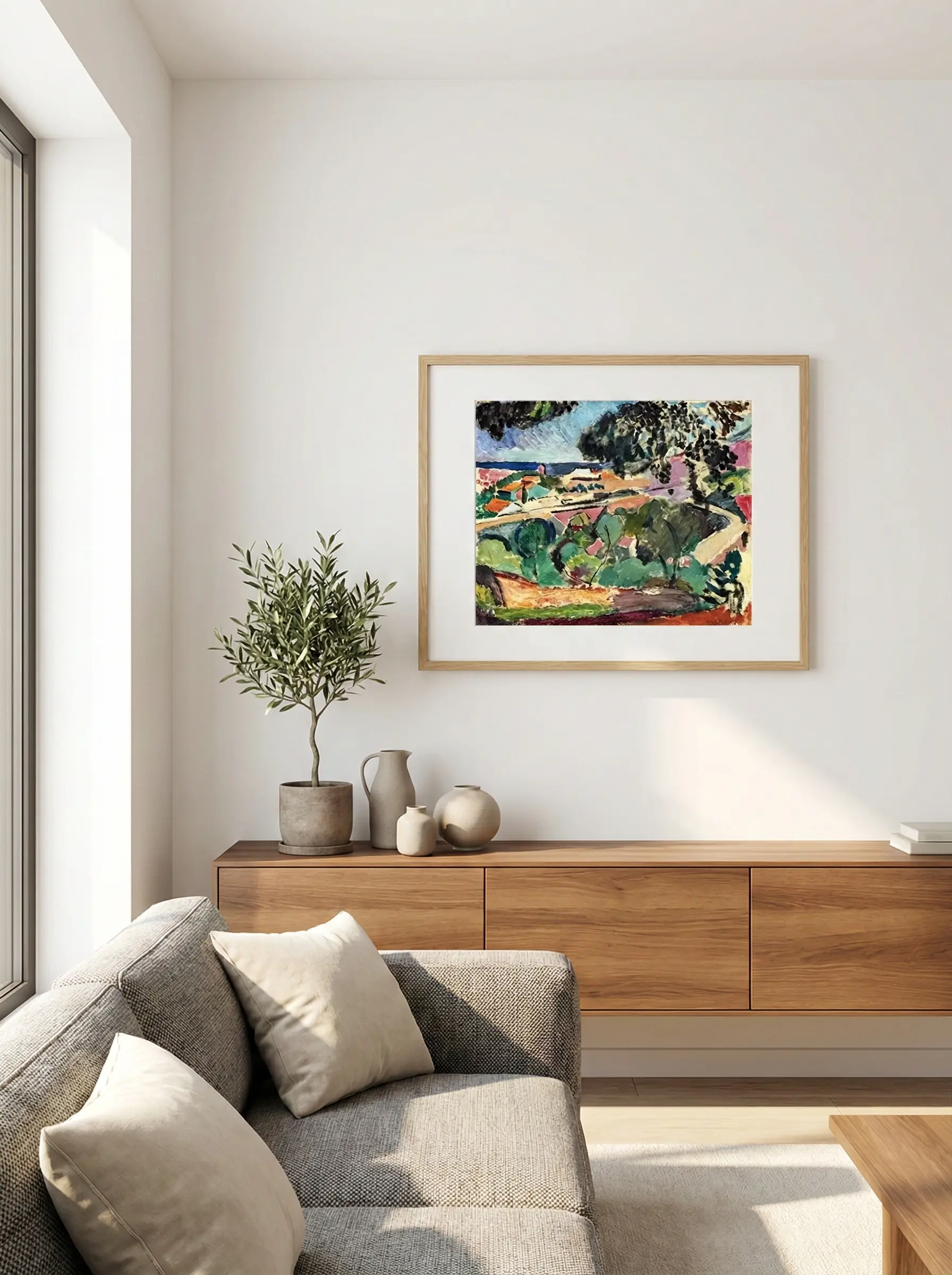
Henri Matisse’s Landscape at Collioure serves as such a modernist manifesto. It is not an imitation of a camera but a transformation of visual experience into an emotional encounter through intense color.
Styling Inspiration
- Visual Juxtaposition: Placing this piece in a minimalist dining room creates a stunning tension between "restraint" (the interior) and "liberation" (the Fauvist colors).
- The Art of Negative Space: The white walls and light oak furniture serve as a clean canvas, allowing the painting to function not just as decor, but as a powerful visual event.

03. Order & Dreams: Subconscious Dialogue in the Bedroom
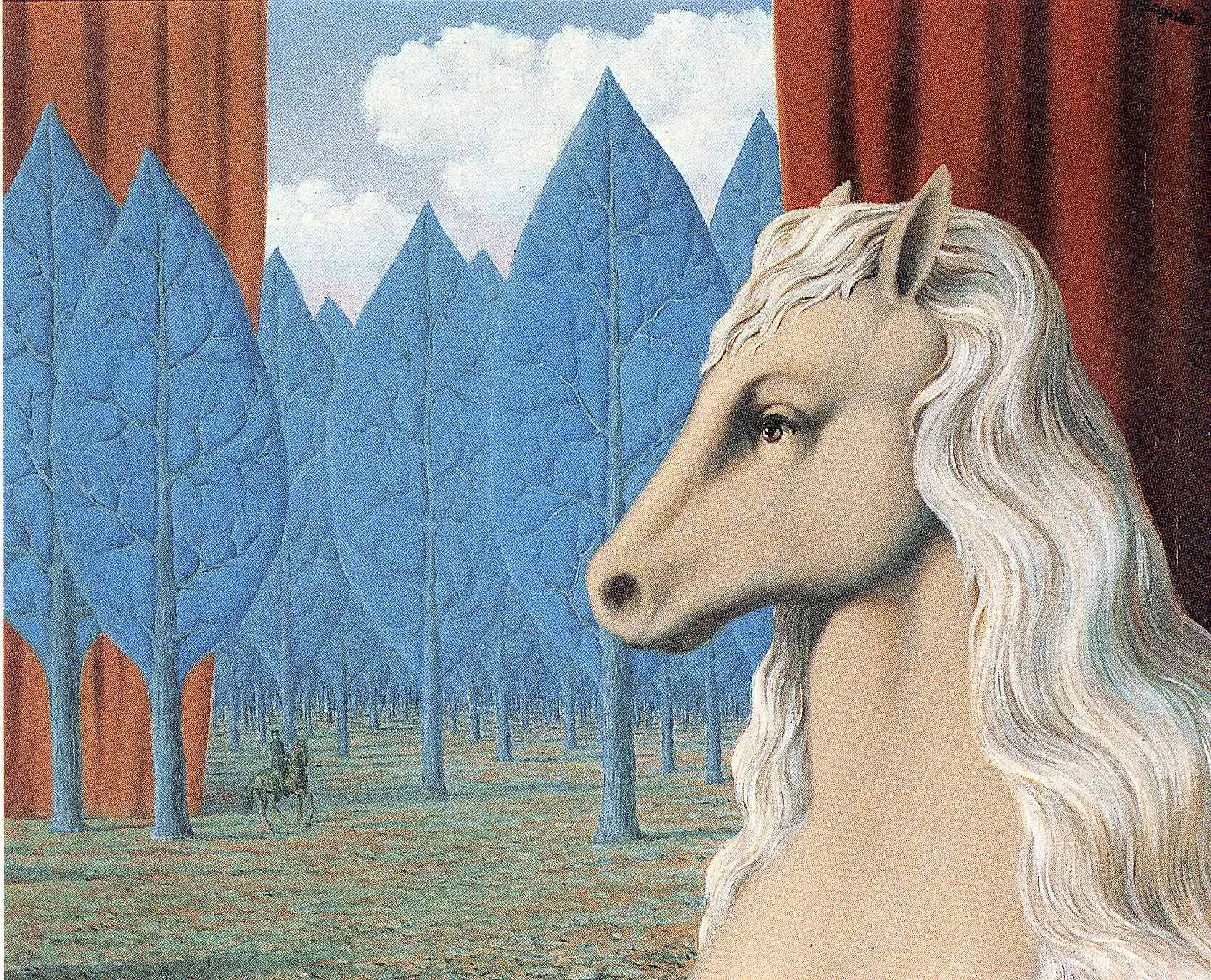
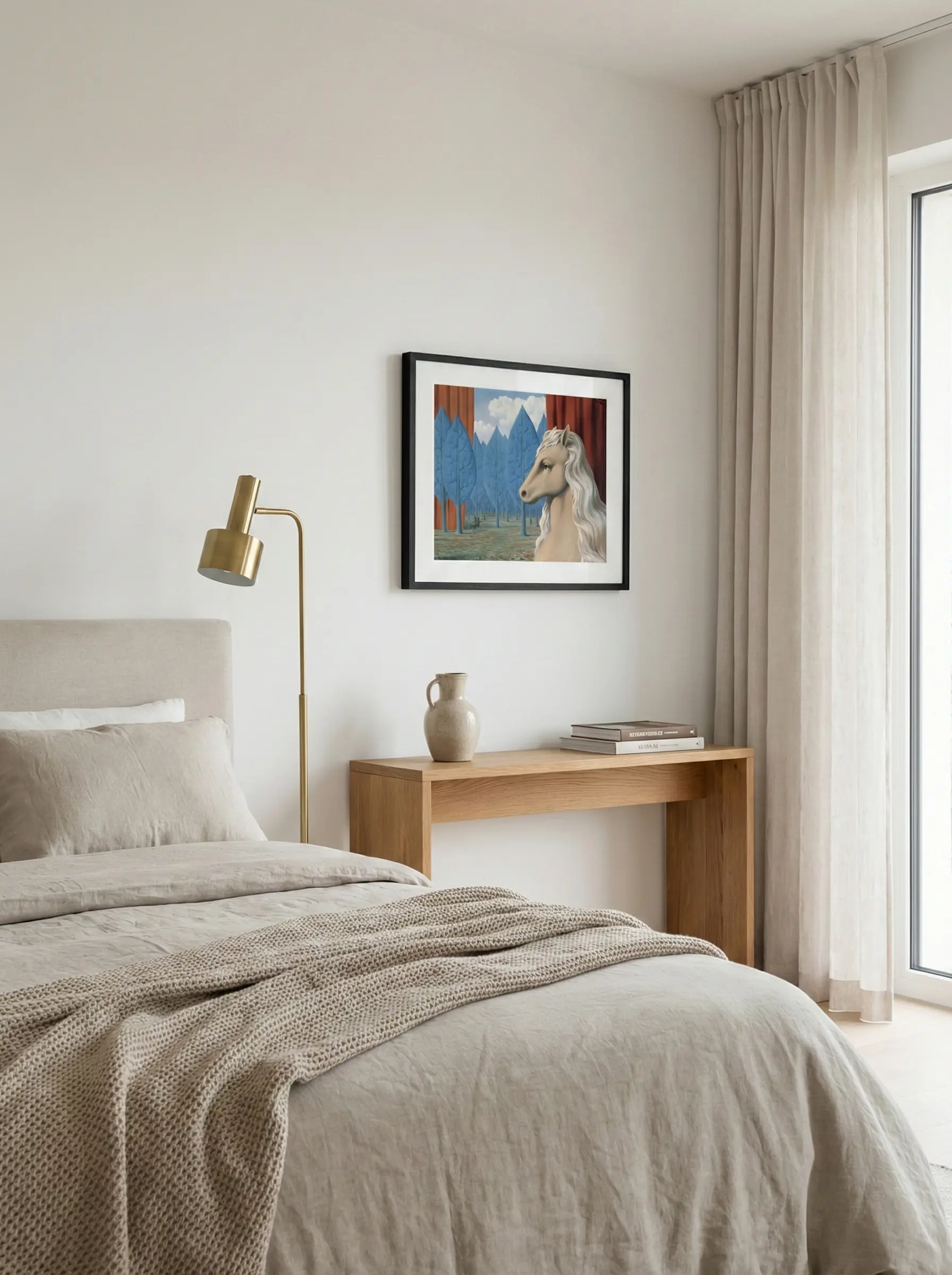
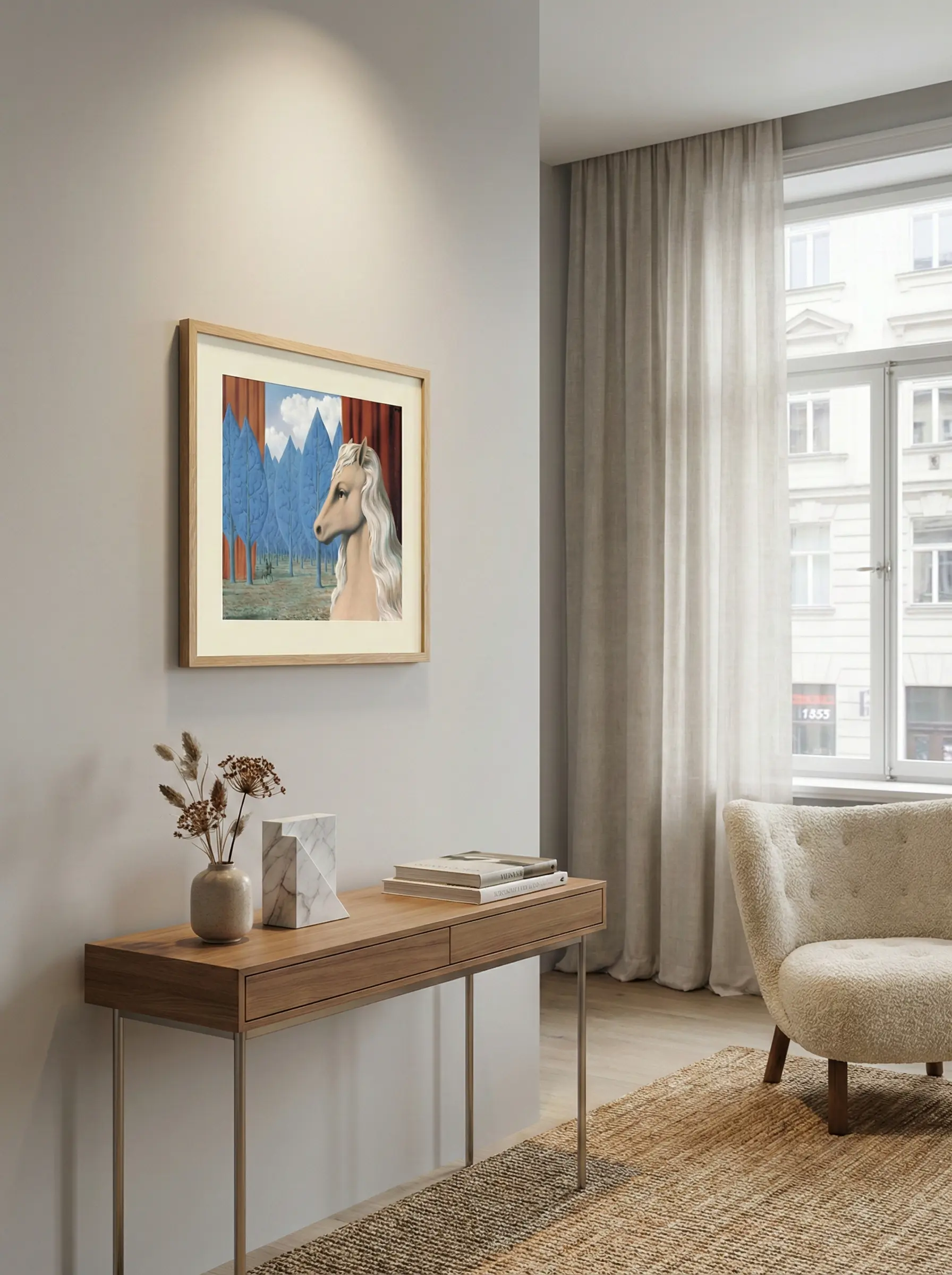
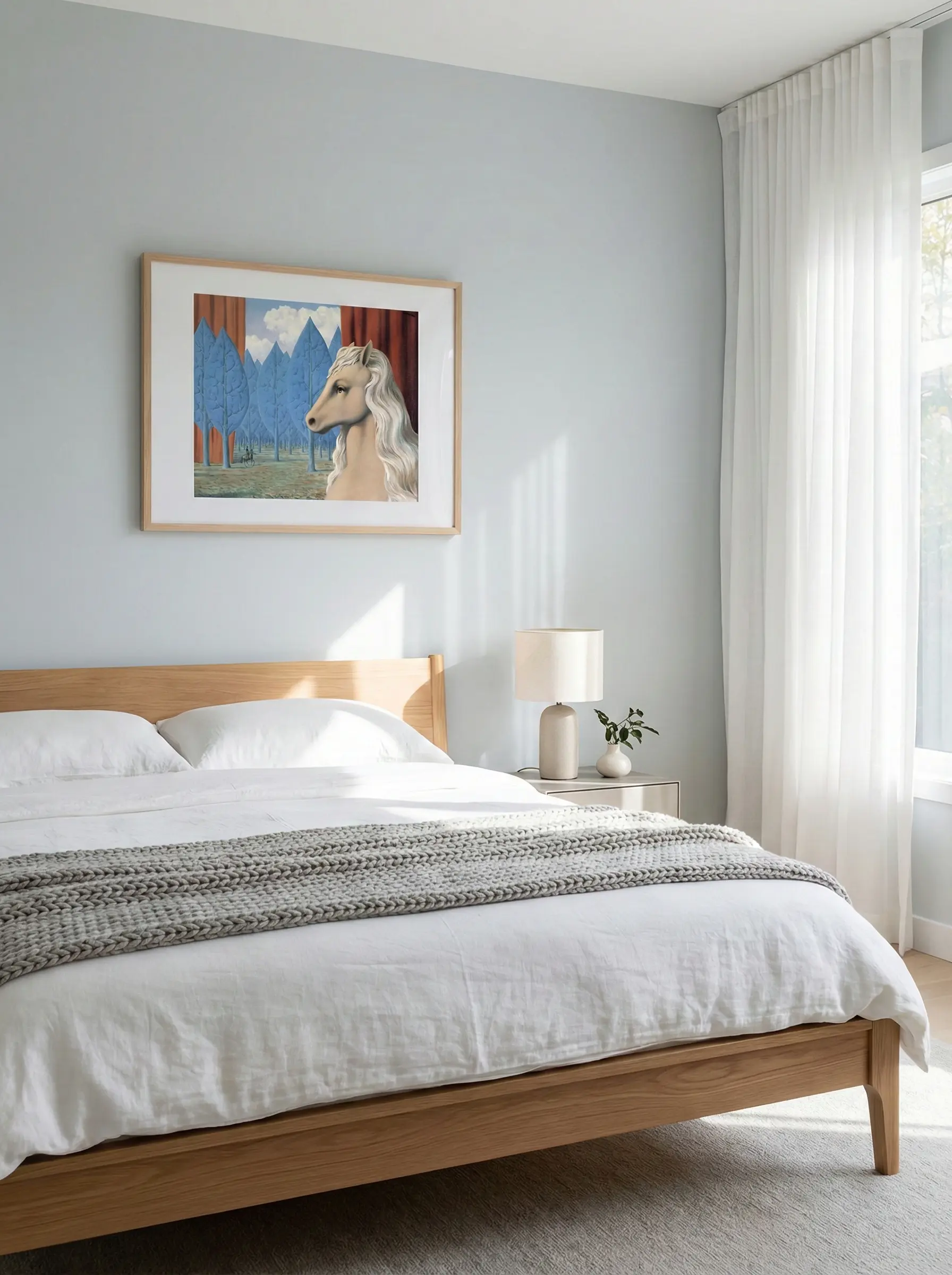
The bedroom is a resting place for reason and an incubator for dreams. In this space, art serves to guide the mind into a state of relaxation, or what psychologists call "soft fascination."
René Magritte’s Pure Reason uses displacement and distortion of scale to create a puzzle that is seemingly serene yet full of contradictions.
Styling Inspiration
- Atmosphere: The clean lines of minimalism represent the "rational world," while Magritte’s surrealism introduces "dreams." This contrast injects the perfect amount of mystery into the sleeping space.
- Color Psychology: The iconic blue tones in the painting help lower the heart rate, cultivating a deep sense of tranquility.
04. Energy Activation: A Statement on Urban Life
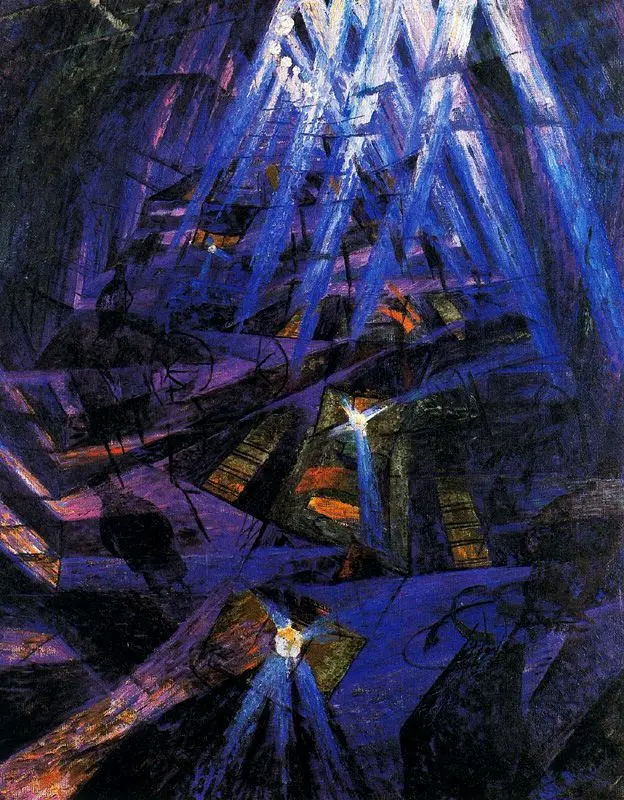
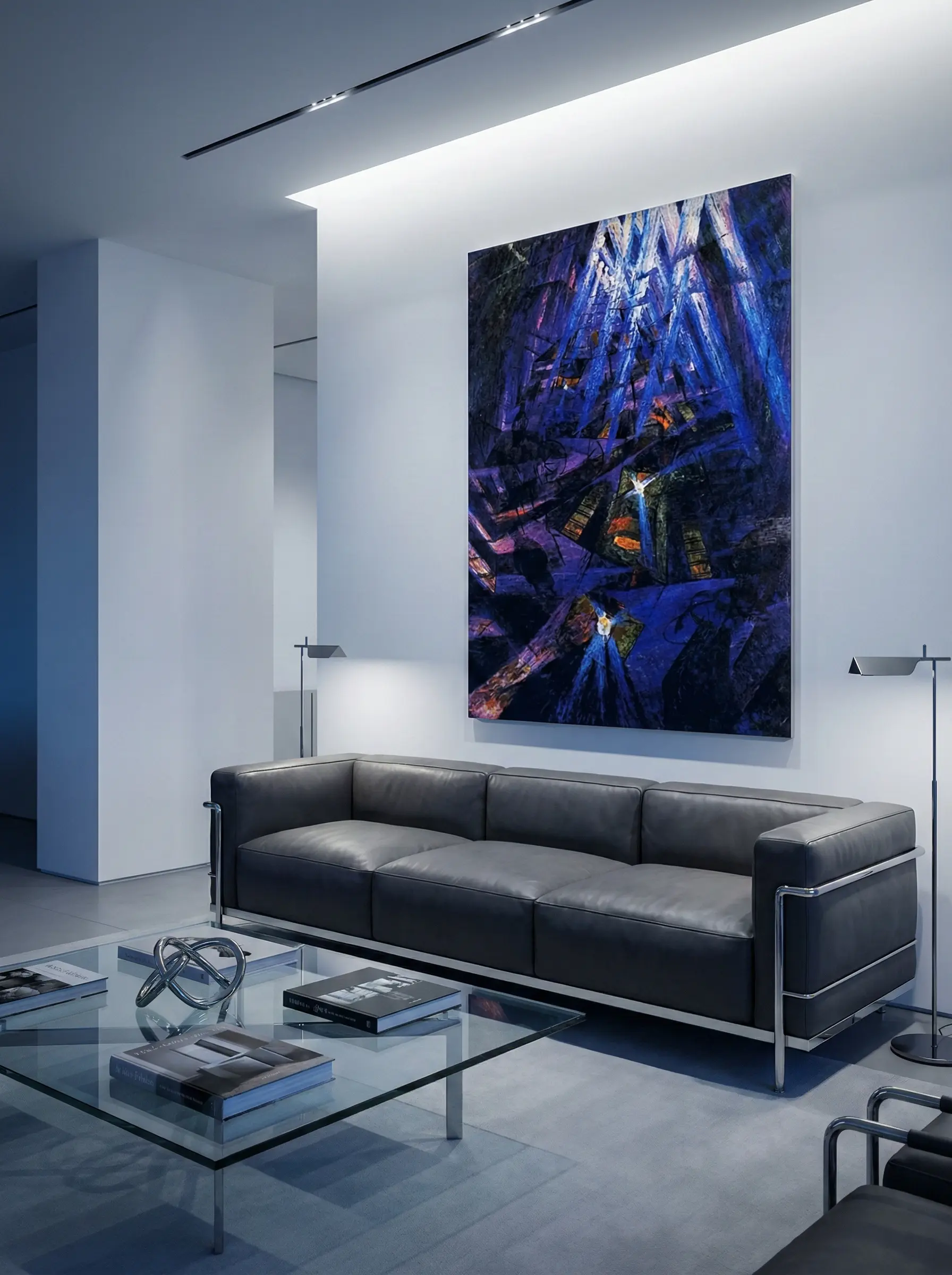
For minimalist spaces that lean towards cool tones, industrial aesthetics, or a more masculine vibe (featuring leather, concrete, and steel), we need artwork that can hold its own against these "hard" materials.
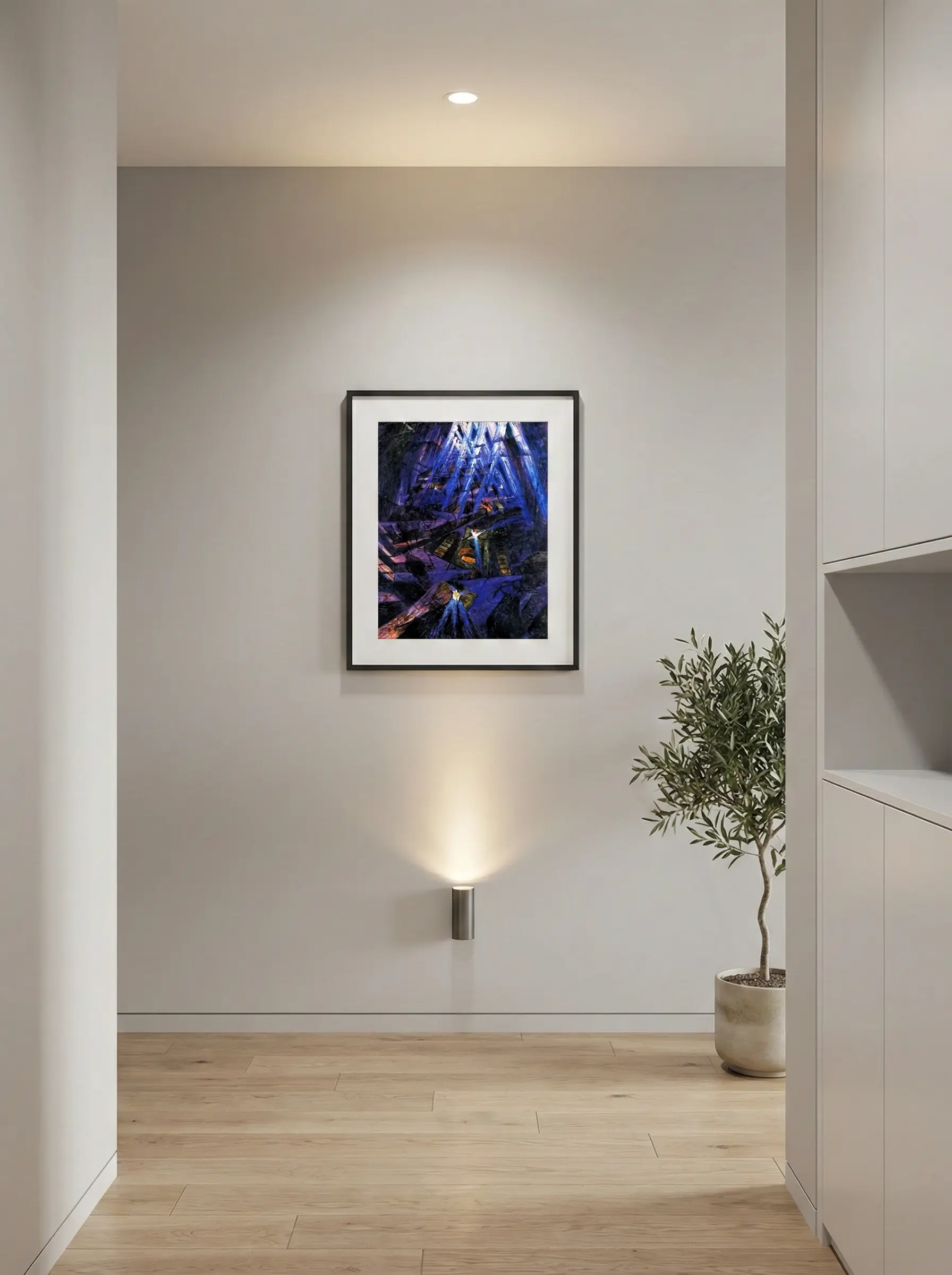
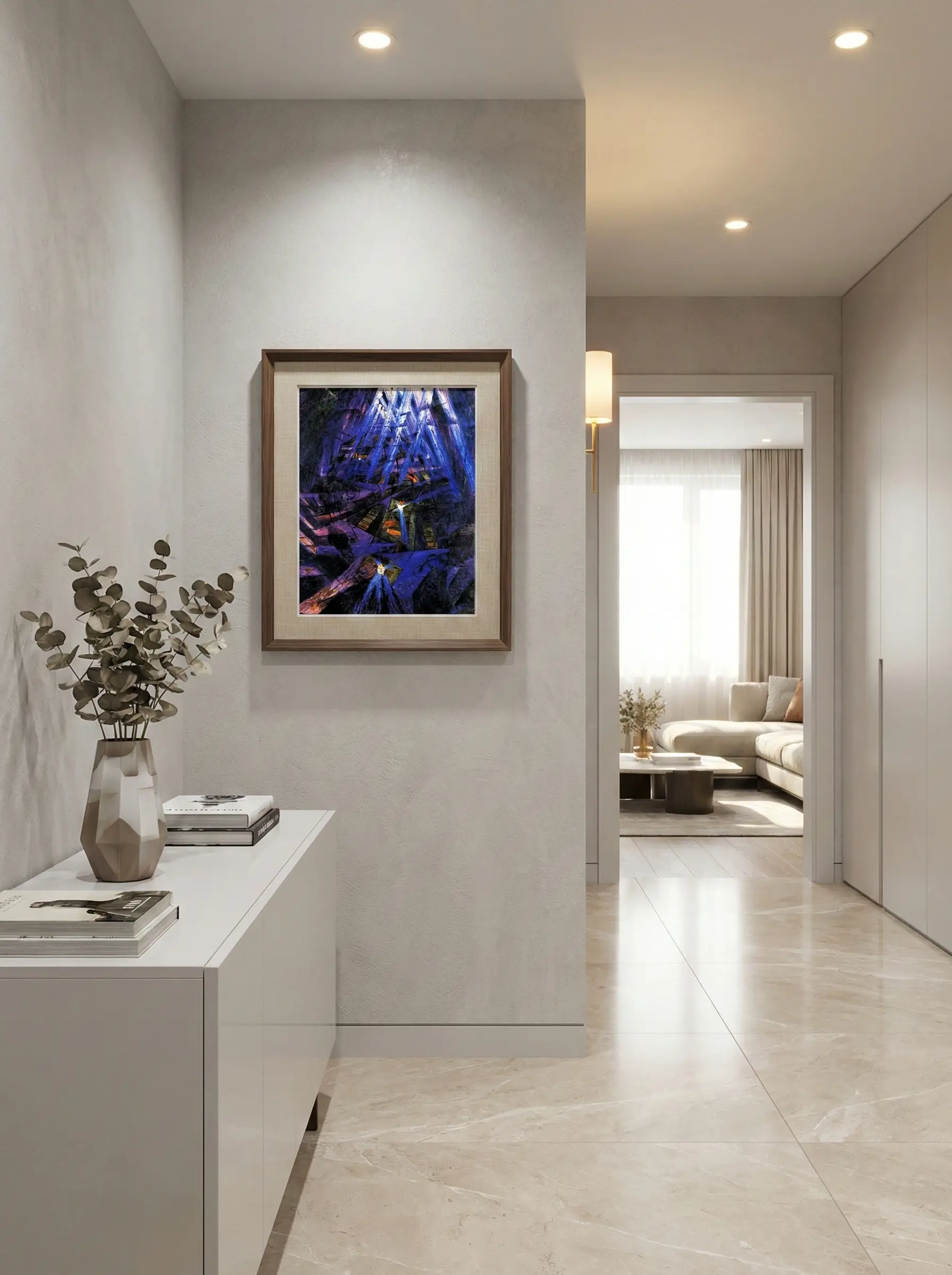
Umberto Boccioni’s The Strengths of a Street is a Futurist masterpiece that captures the physical energies of light, sound, and speed in the modern metropolis.
Styling Inspiration
- ASpatial Activation: Instead of clashing, the painting activates the space. The deep electric blues and nocturnal blacks complement modern materials like black leather sofas perfectly.
- Visual Focal Point: It serves as an excellent "Conversation Piece," transforming a potentially empty hallway or living room into a sophisticated, high-impact visual statement.
05. Intellectual Conflict: Breaking the Safety of Minimalism
Minimalism can easily slip into a boring sense of "safety." To prevent a space from feeling sterile, we need to introduce a deeper, perhaps even stinging, narrative.
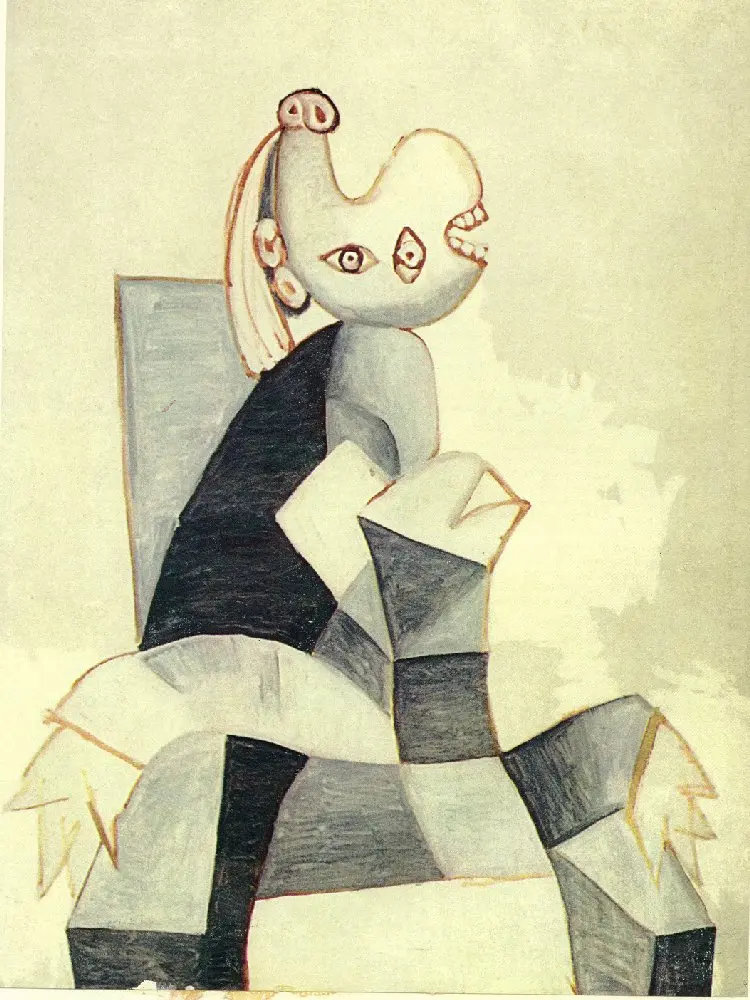
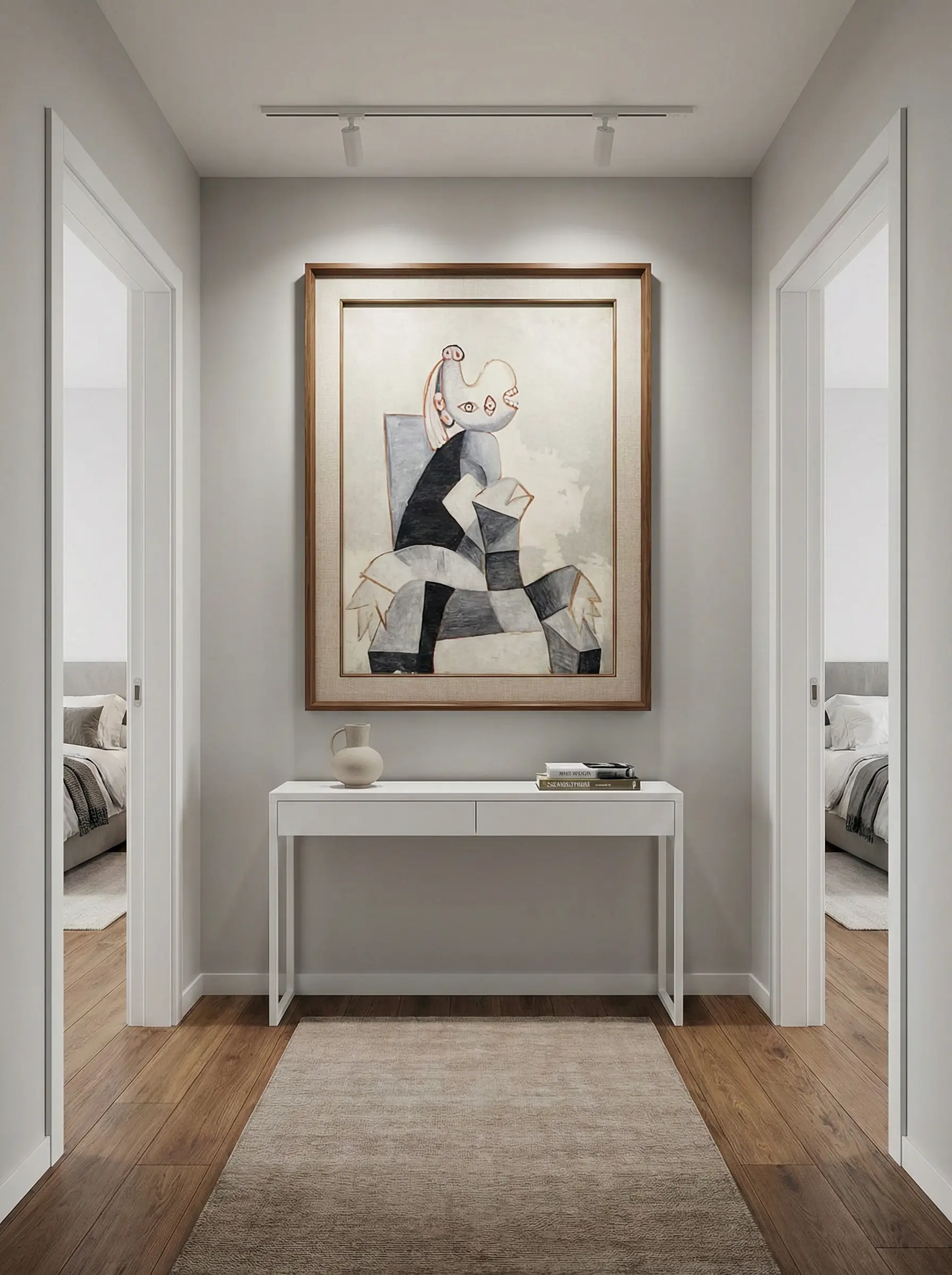
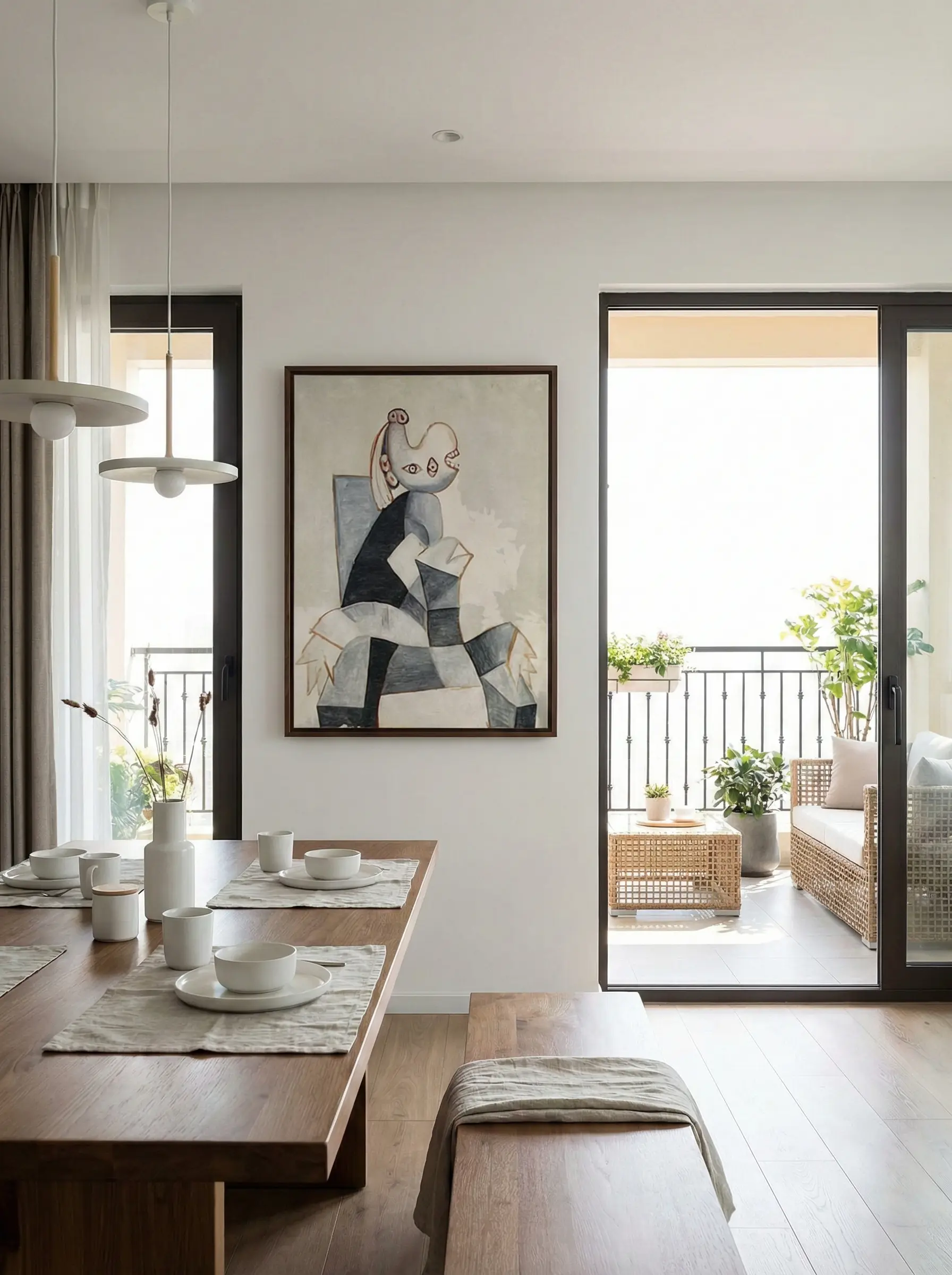
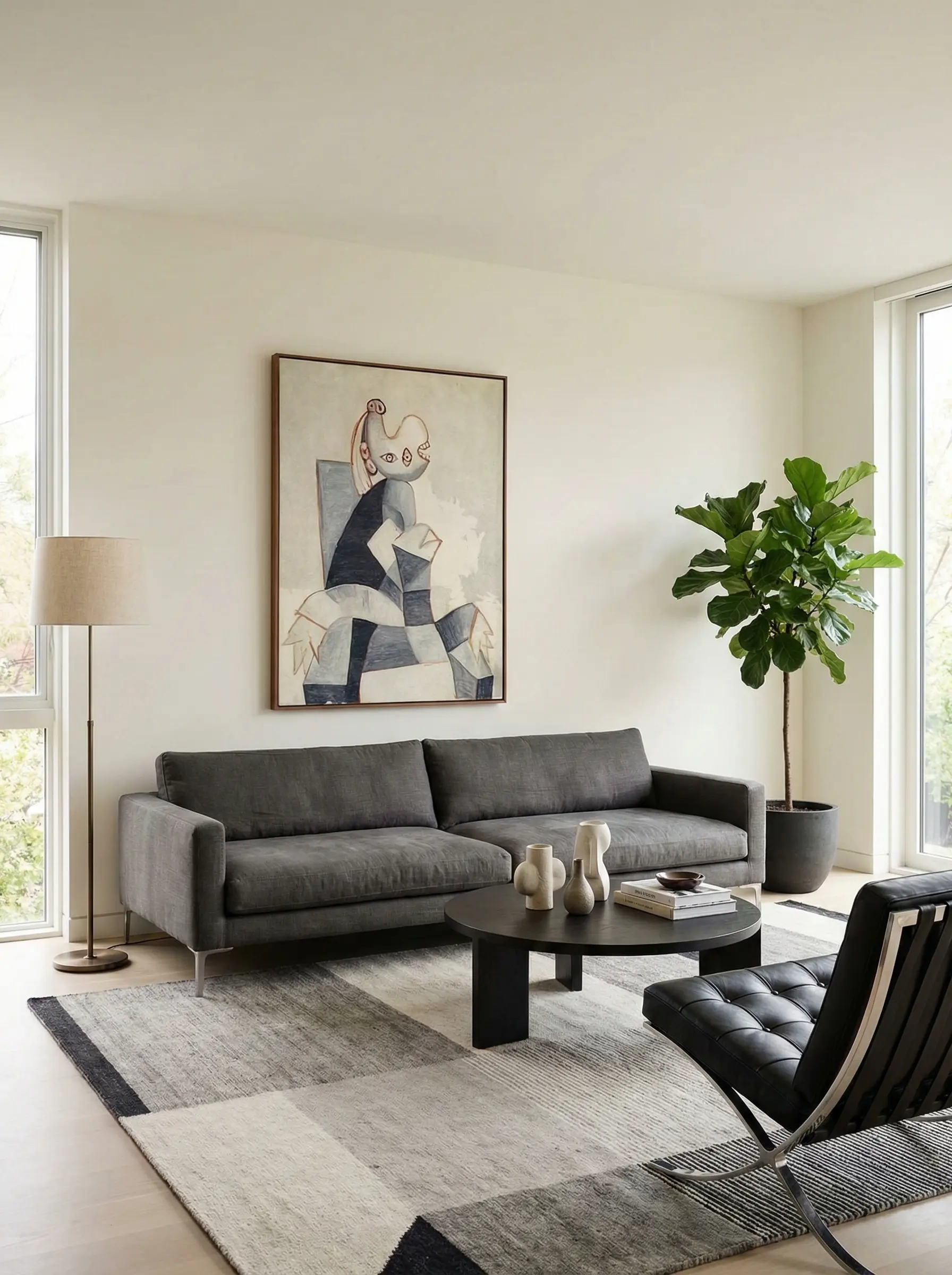
Pablo Picasso’s Woman Seated in a Gray Armchair (1939) is a furious response to the victory of fascism. Through extreme ugliness and a suffocating gray palette, he reveals how war destroys both humanity and beauty.
Styling Inspiration
- Intellectual Statement: Integrating a work containing historical trauma into a minimalist home is a bold design statement. It signals that the inhabitant seeks depth of thought over mere superficial beauty.
- Order vs. Chaos: The room represents order, calm, and silence; the painting represents chaos, noise, and distortion. This intense psychological contrast prevents the minimalism from feeling "sterile".
- Tonal Discipline: Despite the heavy subject matter, the gray palette of the painting maintains a high degree of visual unity and restraint when paired with modern furniture like dark grey fabric sofas or black leather chairs.
06. Curator’s Guide: Rules for Grounding Art
Choosing the right art is half the battle; hanging it correctly is the rest. Here are standard design principles:
- Scale: The artwork should span approximately 2/3 to 3/4 of the width of the furniture below it. This anchors the piece visually.
- Height: The center of the painting should be approximately 145-152 cm (57-60 inches) from the floor.
- Lighting: Use directional lighting angled at 30 degrees to highlight texture and ensure accurate color rendering.
Conclusion:
In a modern minimalist home, abstract art is not merely a decorative accessory; it is a projection of the inhabitant's inner world. It fills the silence without breaking the peace. Whether as a quiet harbor for rest or a source of fluid energy for inspiration, art makes the home complete.
Enter Silence & Tension—artworks for modern minimalist interiors shaped by calm and contrast. 👉 [Click Here: Explore the Gallery]