
From Hartford
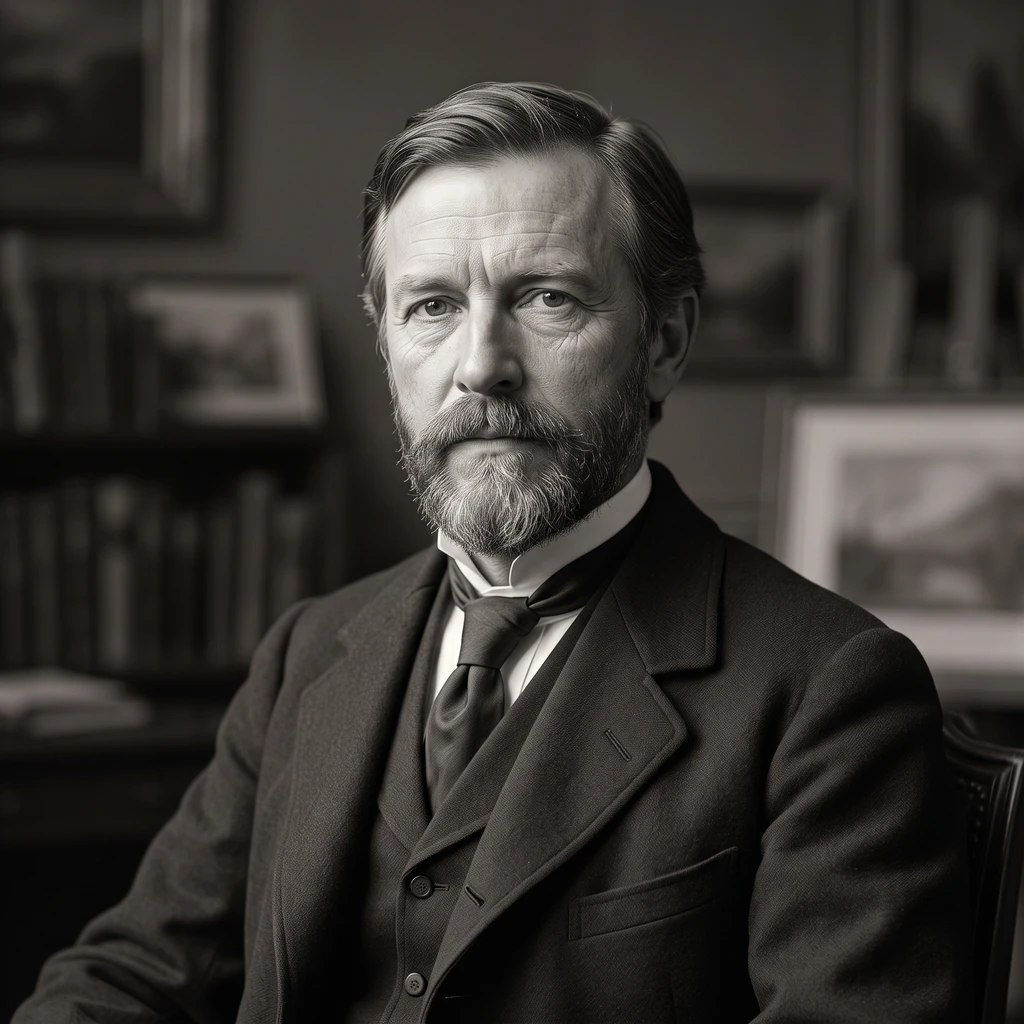
Frederic Edwin Church
Church and Thomas Cole, the two most esteemed painters of the Hudson River school, were associated from 1844 to 1846 as pupil and master. Church's early work, such asThe Hooker Company Journeying Through the Wilderness,continues an allegorical trend of growing importance in Cole's late work. By the 1850s, however, Church leaned toward a more objective rendition of landscape, particularly in his New England scenes. Church is also well known for his South American views, his hugely successfulNiagara,1857 (The Corcoran Gallery of Art, Washington, D.C.), exotic subjects such asThe Icebergs,1861 (Dallas Museum of Fine Arts), and views of the Middle East. His comprehensive landscapes incorporate extensive botanical, meteorological, and geological information as well as an almost unshakable faith in a deistic universe.ReferencesDavid Huntington,The Landscapes of Frederic Edwin Church: Vision of an American Era(New York: Braziller, 1966); Kelly,Church; Franklin Kelly and Gerald L. Carr,The Early Landscapes of Frederic Edwin Church, 1845–1854(Fort Worth: University of Texas Press, 1987).William Truettner, edThe West as America: Reinterpreting Images of the Frontier, 1820–1920(Washington, D.C. and London: Smithsonian Institution Press, 1991)
Art by Frederic Edwin Church
View allFrederic Edwin Church
Frederic Edwin Church: Explore the overwhelmingly spectacular, hyper-detailed, profoundly majestic 19th-century American Hudson River School masterpieces of Frederic Edwin Church.