
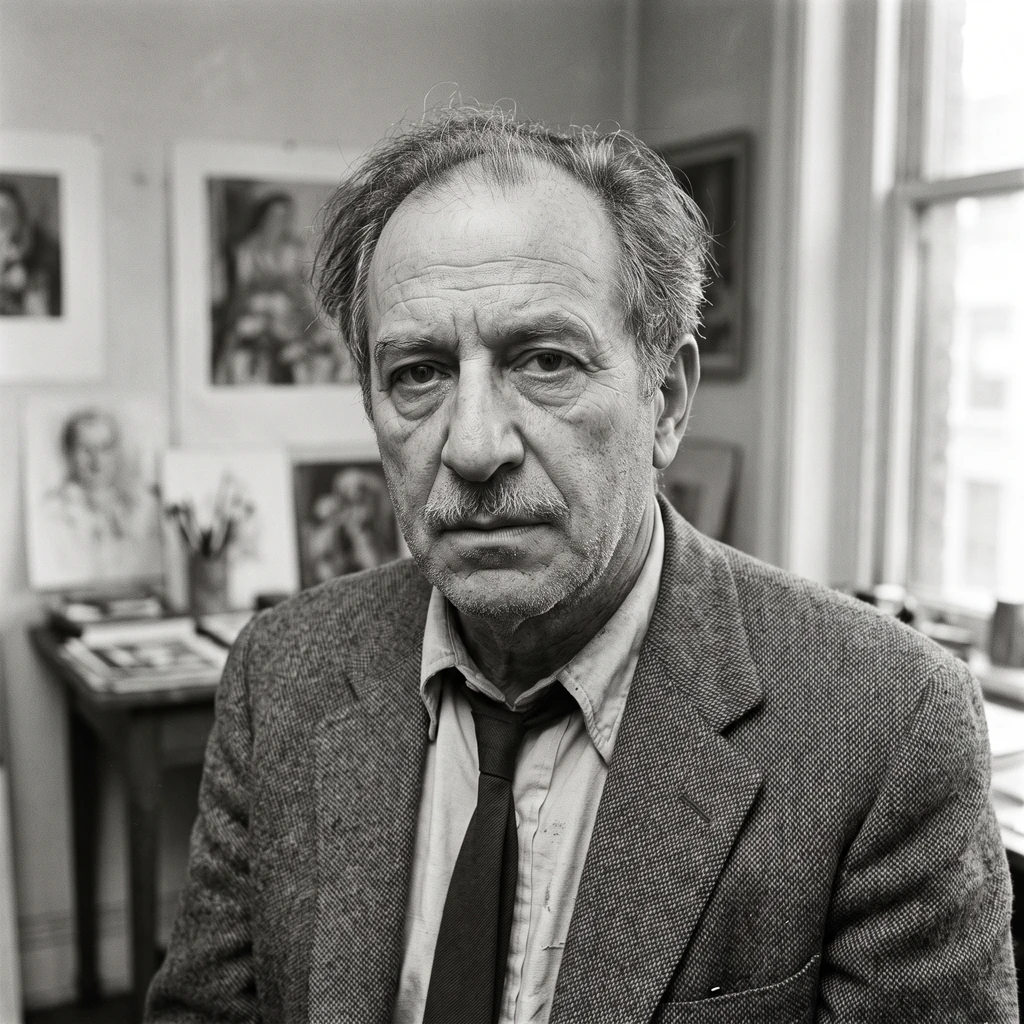
Jack Levine
The youngest of eight children, Jack Levine was born in south Boston of Jewish immigrant parents. Along with Hyman Bloom, he studied with Harold Zimmerman and Denman Ross while still a teenager, and his early work reflects their emphasis on Old Master traditions. In 1935, shortly after its formation, Levine joined the WPA's Federal Art Project, where he was employed intermittently until 1939. In 1937, while with the WPA, Levine paintedThe Feast of Pure Reason,the work that catapulted him to fame. The painting, which depicted a politician, a policeman, and a "gentleman" of wealth, was interpreted by the press as an indictment of police corruption and its connection to wealth and organized crime. Levine is noted as a social realist and draws his subjects—sometimes scenes sympathetic to the socially oppressed and sometimes satiric commentaries on social and political situations from contemporary life. Like Bloom, he is an Expressionist whose painterly style is rooted in early twentieth-century German art.Virginia M. MecklenburgModern American Realism: The Sara Roby Foundation Collection(Washington, D.C.: Smithsonian Institution Press for the National Museum of American Art, 1987)
Art by Jack Levine
View allJack Levine
Jack Levine: Immerse yourself in the brilliantly satiric, highly faceted, thickly painted 20th-century American Social Realist works of Jack Levine.