
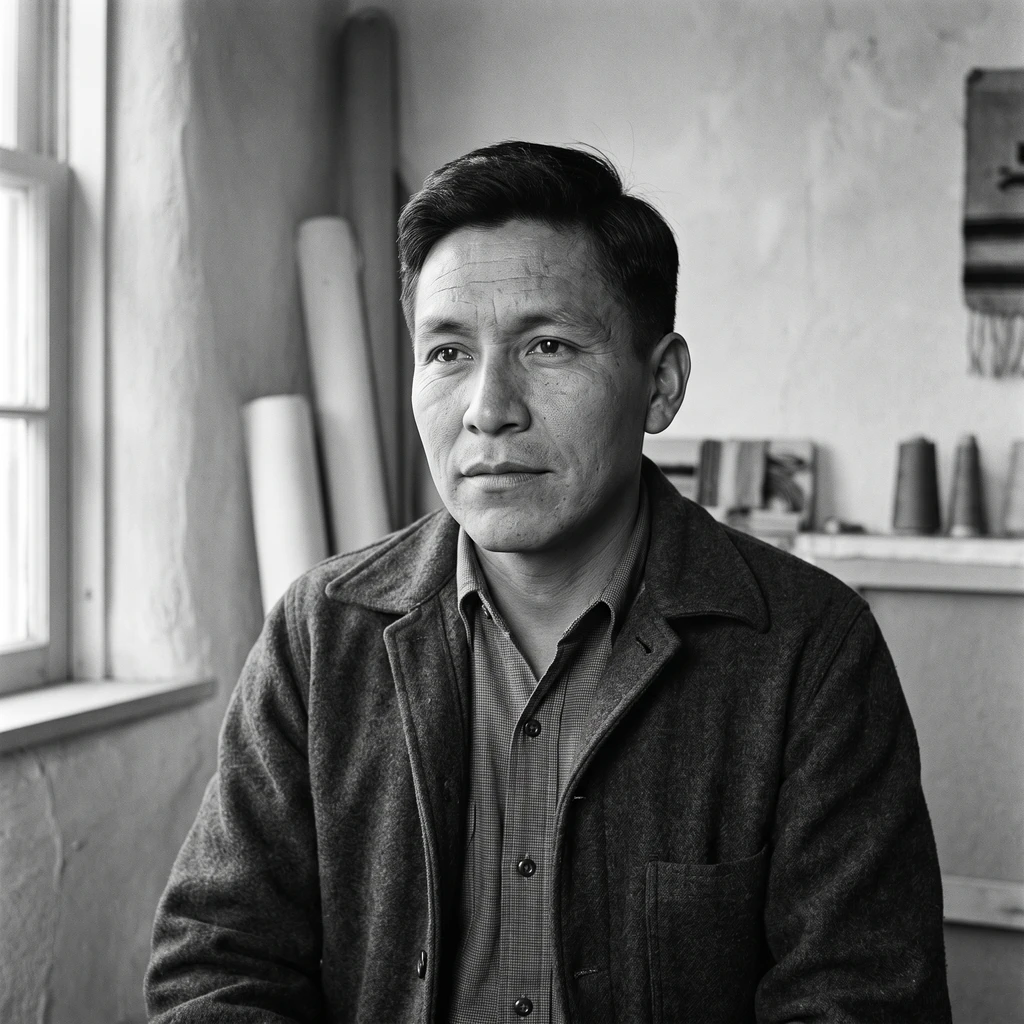
Red Robin
Athough little is known about Red Robin (unknown affiliation, probably Zuni), at least for a time he lived in both Santa Fe and Taos. In the 1930s, he was employed by the Colorado Federal Art Project of the Works Progress Administration. He later moved to New York and became a textile designer. Unlike other Pueblo paintings,Landscape with Two Figures on Horseback[SAAM, 1979.144.91] represents the artist's interest in a looser approach to creating images. Perhaps Red Robin was responding to the work of Anglo artist in Santa Fe and Taos who used watercolor in a very impressionistic style. The landscape and figures are indicated by broad strokes of watercolor without the sharply defined outlines that characterize most Pueblo watercolors.Andrew ConnorsPueblo Indian Watercolors: Learning by Looking, A Study Guide(Washington, D.C.: National Museum of American Art, 1993).
Art by Red Robin
View allRed Robin
Red Robin: Elevate your collection with the vibrant, highly authentic 20th-century Native American (Zuni) paintings and textile works of Red Robin.